.jpeg)

Turn your clients’ fear of open water into a competitive advantage.
Short answer: A structured, periodized swim program that blends technique drills, aerobic sets, open‑water simulations and targeted strength work will improve efficiency, cut race‑day anxiety and shave minutes off a triathlete’s swim split.
As a coach, you already know that the swim leg can dictate the rhythm of the entire race. A slow start forces a harder bike, while a strong exit leaves the athlete fresh for the run. Yet many online trainers treat swimming as an afterthought, tacking a few pool laps onto a generic endurance plan. The result is inconsistent pacing, wasted energy and, more often than not, a client who dreads the water.
In this guide we break down the science‑backed components of an elite‑level triathlon swim training program and show how to embed them in a digital coaching workflow. You’ll walk away with a step‑by‑step framework, concrete drill libraries, monitoring tools, and tips for leveraging Spur Fit to automate progress tracking.
Why Swim‑Specific Training Matters More Than You Think
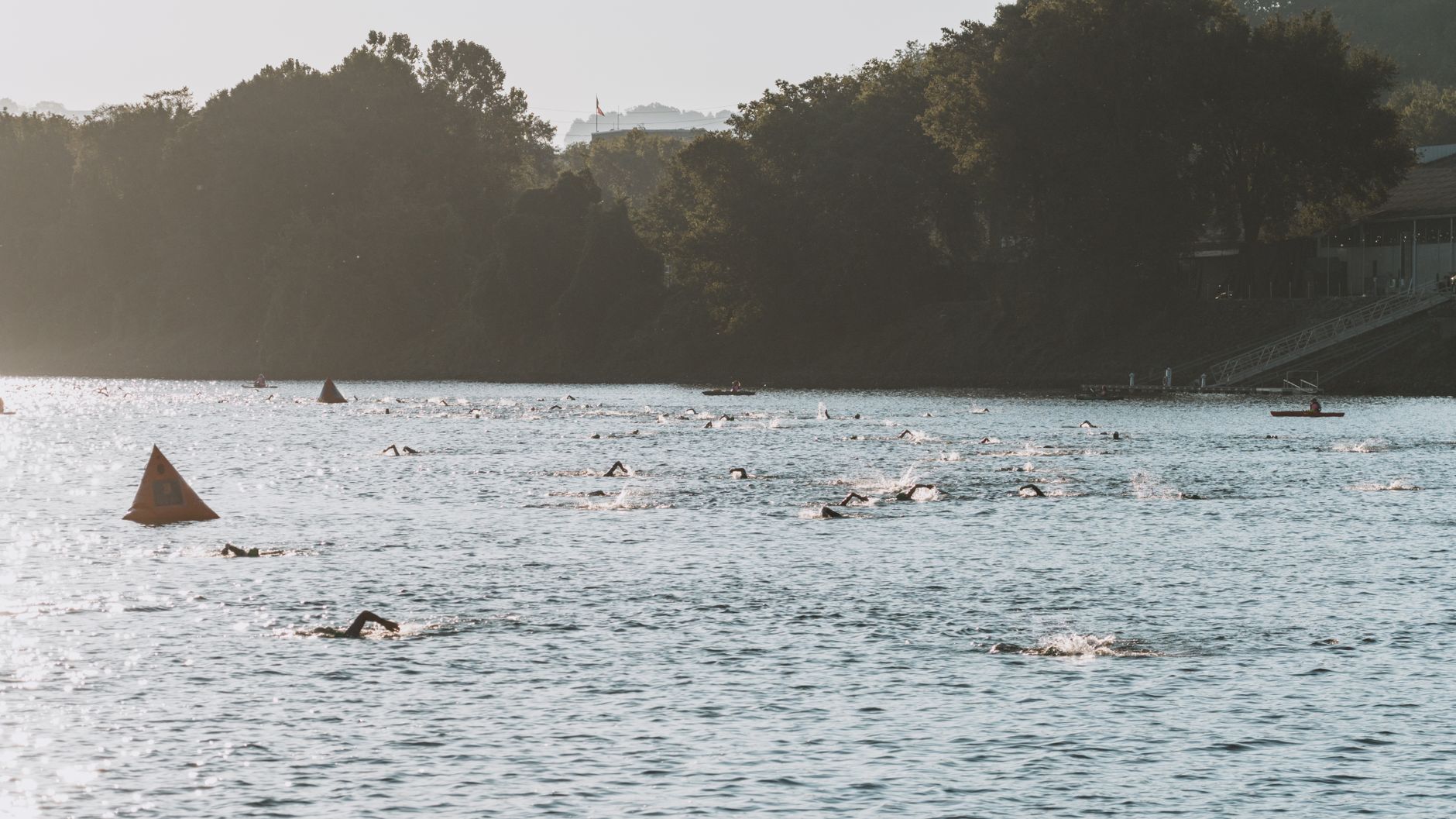
Research from the Journal of Sports Sciences shows that a 5% improvement in swim efficiency can translate to a 2‑minute gain in a standard Olympic‑distance triathlon. The same study found that athletes who trained exclusively in a pool lost more time in open‑water races because they lacked adaptation to sighting, wave resistance and variable pacing.
Three evidence‑based reasons make swim‑focused programming non‑negotiable:
- 1Biomechanical efficiency
Reducing drag through body position and catch timing lowers oxygen cost per meter.
- 2Neuromuscular specificity
Open‑water conditions demand different motor patterns than a lane‑restricted pool.
- 3Psychological readiness
Repeated exposure to sighting and crowding builds confidence and cuts race‑day cortisol spikes.
Designing a Personalized Swim Blueprint
One‑size‑fits‑all rarely works in endurance sports. Your program must reflect each athlete’s current ability, race goals and environmental constraints.
1. Assess Ability and Experience
Start with a baseline swim test: 400 m time trial (or 500 yd for yards). Record stroke count, heart rate and perceived exertion. This data feeds directly into Spur Fit’s client dashboard, where you can generate a skill matrix and set realistic weekly volume targets.
2. Define Specific Objectives
Typical objectives include:
- Reduce 100 m split by 2‑3 seconds.
- Master bilateral breathing for better sighting.
- Complete a 750 m open‑water simulation without stopping.
Clear metrics make it easy to program progressive overload and celebrate milestones.
3. Match Training Environment
If your client lives near a lake, schedule at least one weekly open‑water session. When that isn’t possible, replicate conditions with a tethered swim or a swim‑bench with resistance bands. The key is to vary temperature, visibility and crowd density throughout the macrocycle.
4. Periodize for Peak Performance
Use a classic three‑phase model:
| Phase | Duration | Focus |
|---|---|---|
| Base | 6‑8 weeks | Technique, aerobic volume, core stability |
| Build | 4‑5 weeks | Threshold sets, open‑water drills, race‑pace intervals |
| Taper | 1‑2 weeks | Sharpness, reduced volume, mental rehearsal |
Within each phase, manipulate three variables—distance, intensity and rest—to maintain a progressive stimulus while avoiding overtraining.
5. Integrate Cross‑Training and Recovery
Strength work should target the posterior chain, rotator cuff and core. A 2‑day per week, 45‑minute program (e.g., single‑leg deadlifts, band pull‑aparts, plank variations) improves pull power and body alignment. Recovery protocols—active recovery swims, foam rolling and sleep hygiene—are logged in Spur Fit so you can spot patterns that precede performance dips.
Core Drill Library for Immediate Implementation
Below is a modular drill set you can drop into any week. Adjust repetitions based on the athlete’s level.
- 1Catch‑up Drill
Emphasizes a high elbow entry and a long glide; perform 4 × 50 m focusing on a single arm catch per stroke.
- 23‑3‑3 Breathing
Three strokes left, three right, three bilateral; builds comfort with sighting and reduces asymmetry.
- 3Fist Pull
Swim with clenched hands for 25 m then open for 25 m; enhances forearm engagement and improves feel for water.
- 4Tempo Intervals
4 × 200 m at 85% race pace with 20 s rest; trains lactate tolerance specific to triathlon swim intensity.
- 5Open‑Water Sighting
Every 10 m, lift head for 2 seconds, then resume streamlined glide; repeat for 500 m in a pool to simulate race conditions.
Monitoring Progress and Making Data‑Driven Adjustments
Effective coaching hinges on timely feedback. Use three metrics each week:
When a metric stalls, adjust one variable—add a technique drill, reduce interval length, or increase rest. Spur Fit’s automated alerts flag deviations from the planned progression, letting you intervene before fatigue becomes injury.
Psychological Tools for Open‑Water Confidence
Even the strongest swimmer can falter if anxiety spikes at the start line. Incorporate these low‑cost mental strategies:
- Guided visualization: 5‑minute audio session before each open‑water workout, picturing calm water, rhythmic breathing and a strong finish.
- Progressive exposure: Begin with a lane swim, add a second lane, then move to a wider pool before tackling a lake.
- Self‑talk scripts: Replace “I can’t see” with “I trust my rhythm and will sight confidently.”
Coaches using this approach report higher start‑line confidence and fewer “panic breaths” during races.
Leveraging Technology to Scale Your Swim Program
Manual tracking of sets, drills and recovery can quickly become overwhelming. Spur Fit integrates with popular wearables (Garmin, Polar) to pull heart‑rate and cadence data directly into the client’s swim log. The platform’s AI‑driven workout generator can suggest weekly sets based on the athlete’s recent performance trends, freeing you to focus on coaching cues rather than spreadsheet maintenance.
Use the built‑in video analysis tool to annotate stroke flaws. Clients upload a 25‑meter clip; you add arrows and notes, then the system pushes the annotated video back to the client’s portal. This loop shortens the feedback cycle from days to minutes.
Sample 8‑Week Macrocycle
Below is a concise example you can adapt for sprint, Olympic or half‑Iron distances. All distances are metric; convert as needed.
| Week | Key Session | Volume (m) | Focus |
|---|---|---|---|
| 1‑2 | Technique + Endurance | 3,000 | Catch‑up, 3‑3‑3 breathing, steady 1,500 m aerobic |
| 3‑4 | Threshold Intervals | 3,500 | 4 × 200 m @85% race pace, sighting drills |
| 5‑6 | Open‑Water Simulation | 4,000 | 750 m continuous, tethers, race‑pace finishes |
| 7 | Taper Volume Cut | 2,500 | Short race‑pace 100 m repeats, mental rehearsal |
| 8 (Race Week) | Sharpness | 1,500 | 2 × 200 m easy, visualization, rest |
Plug this template into Spur Fit’s program builder, assign each client their personalized percentages, and let the system send reminders and post‑session surveys automatically.
Frequently Asked Questions
- Three to four sessions strike a balance between skill acquisition and recovery. One session should be technique‑focused, one aerobic, and one high‑intensity or open‑water simulation.
- Yes. Body‑position drills, resistance band work and tethered swims in a small tank can produce measurable improvements in stroke efficiency within six weeks.
- Targeted strength enhances pull power and stabilizes the core, which translates to a tighter body line and reduced drag. Two 45‑minute sessions per week are sufficient for most triathletes.
- Use a simple 0‑10 rating after each open‑water session and log it in Spur Fit. Over time you’ll see a downward trend that correlates with faster sighting times.
- When paired with video feedback, analysis apps provide quantifiable data on stroke rate, distance per stroke and catch angle—metrics that accelerate technique refinement.